Design idea · Buying checklist
How to Choose an Area Rug Without Guessing at the Size
Use the furniture footprint, traffic pattern, pile, and care requirements to choose a rug that works in the room.
Updated September 14, 2026
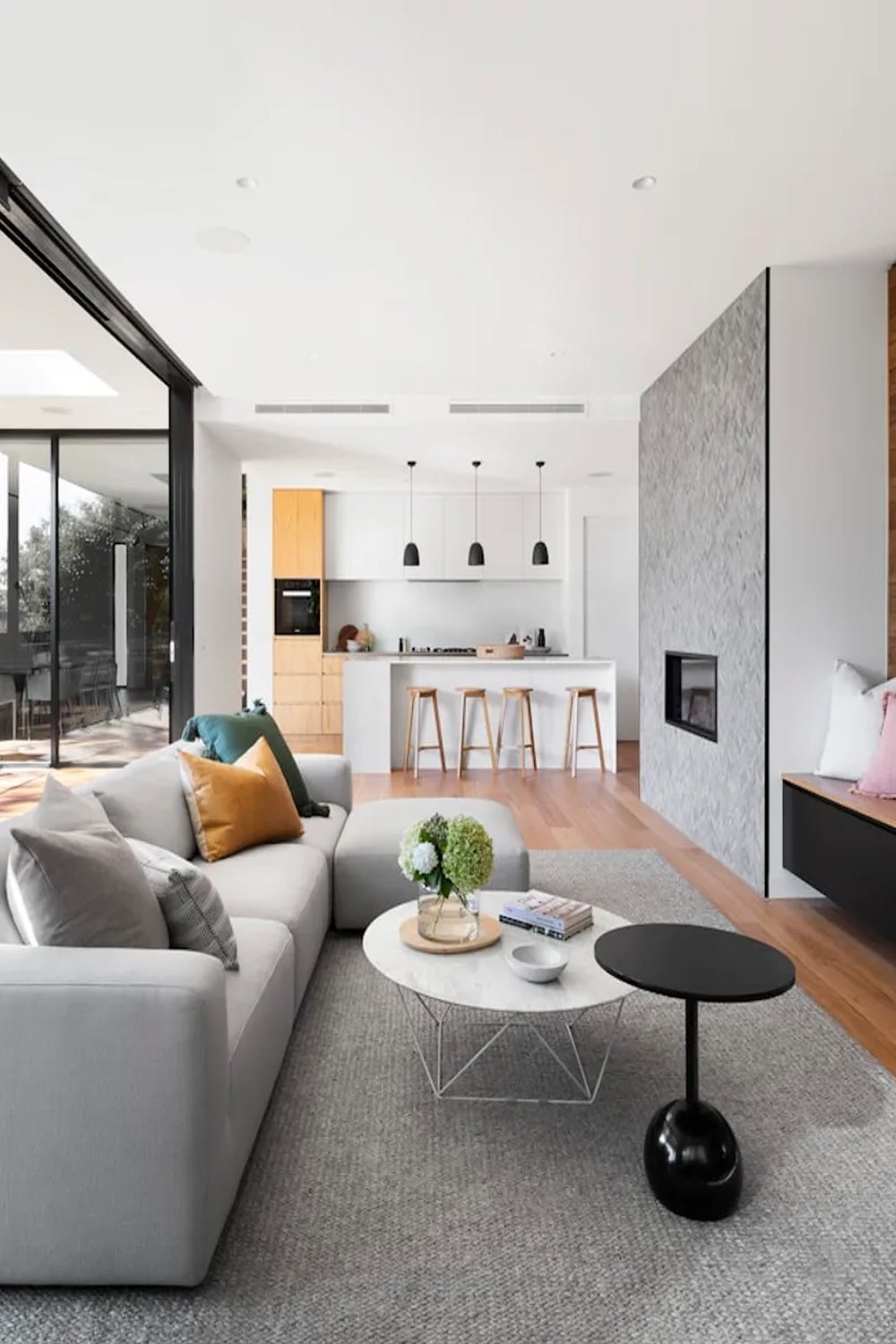
The rug photo gets your attention. The furniture plan tells you whether it belongs in the room. Start with the area the rug needs to cover, then narrow the material, pile, colour, and care to match the way the room is used.
Measure from the furniture, not the empty floor
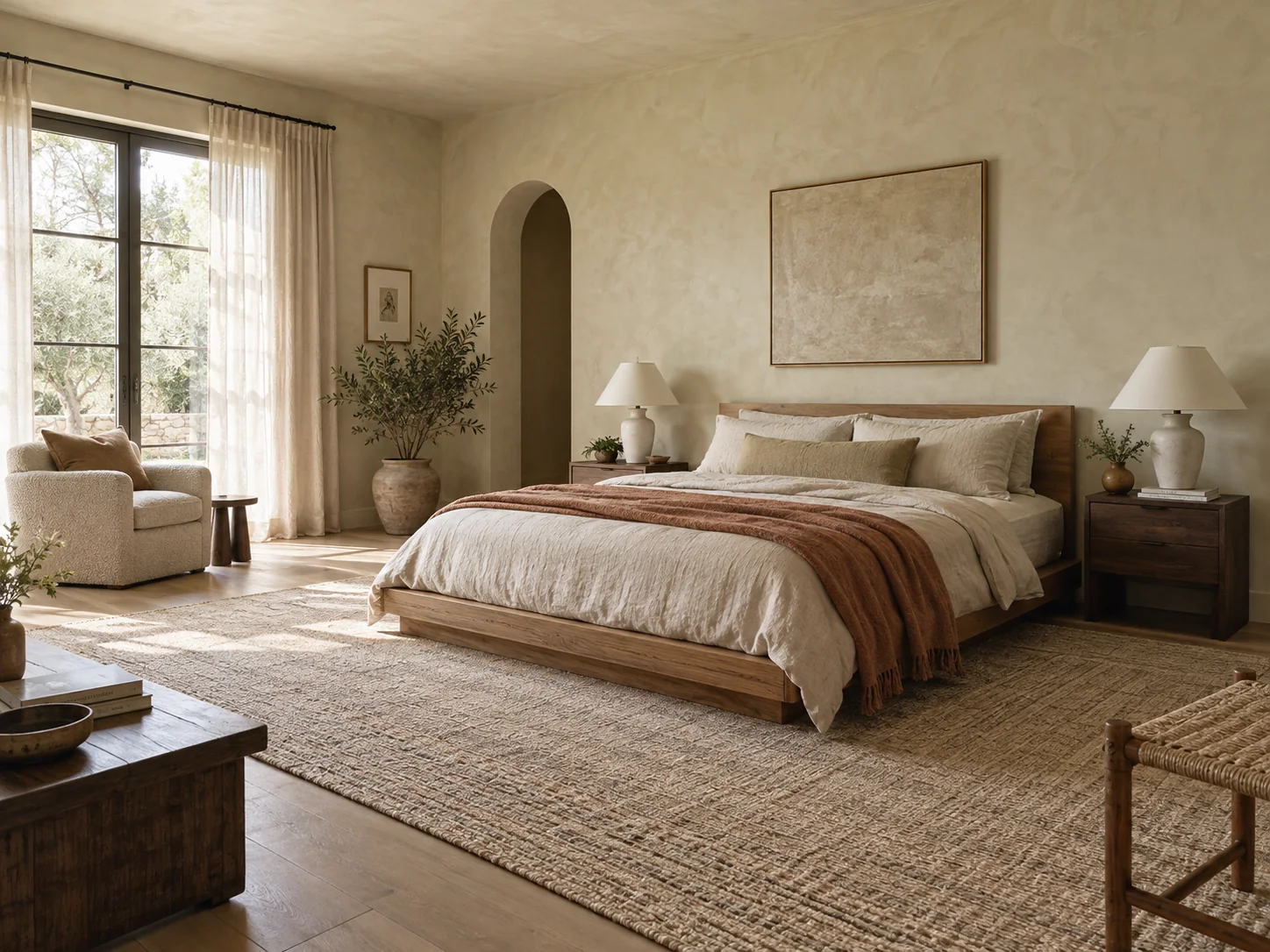
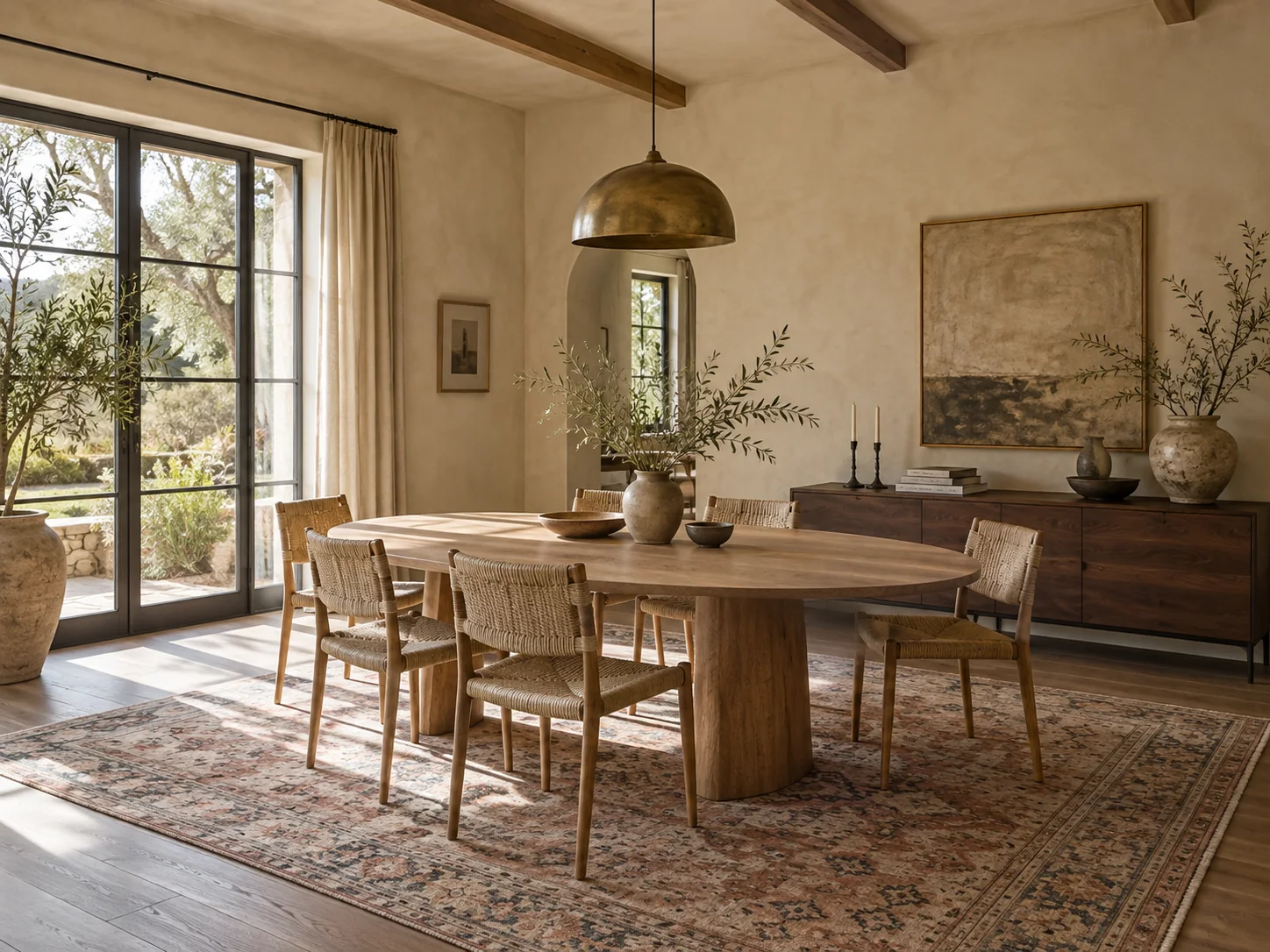
Measure the arrangement as a group. A living room rug should reach at least the front legs of the main seating. A dining rug needs enough border for chairs to pull back without dropping off the edge. In a bedroom, decide how much soft surface you want beside and beyond the bed.
Mark the proposed edges with painter’s tape. Walk around them, open nearby doors, and pull every moving chair through its normal range. This quick check catches scale and clearance problems that a room photo cannot show.
Match the fibre to the household
Jute, wool, cotton, and synthetic fibres respond differently to moisture, vacuuming, friction, and stains. The fibre name alone does not settle the question because blends, weaves, backings, and finishes vary. Read the current care instructions and look for the exact fibre percentages before assuming a rug is washable or suited to pets.
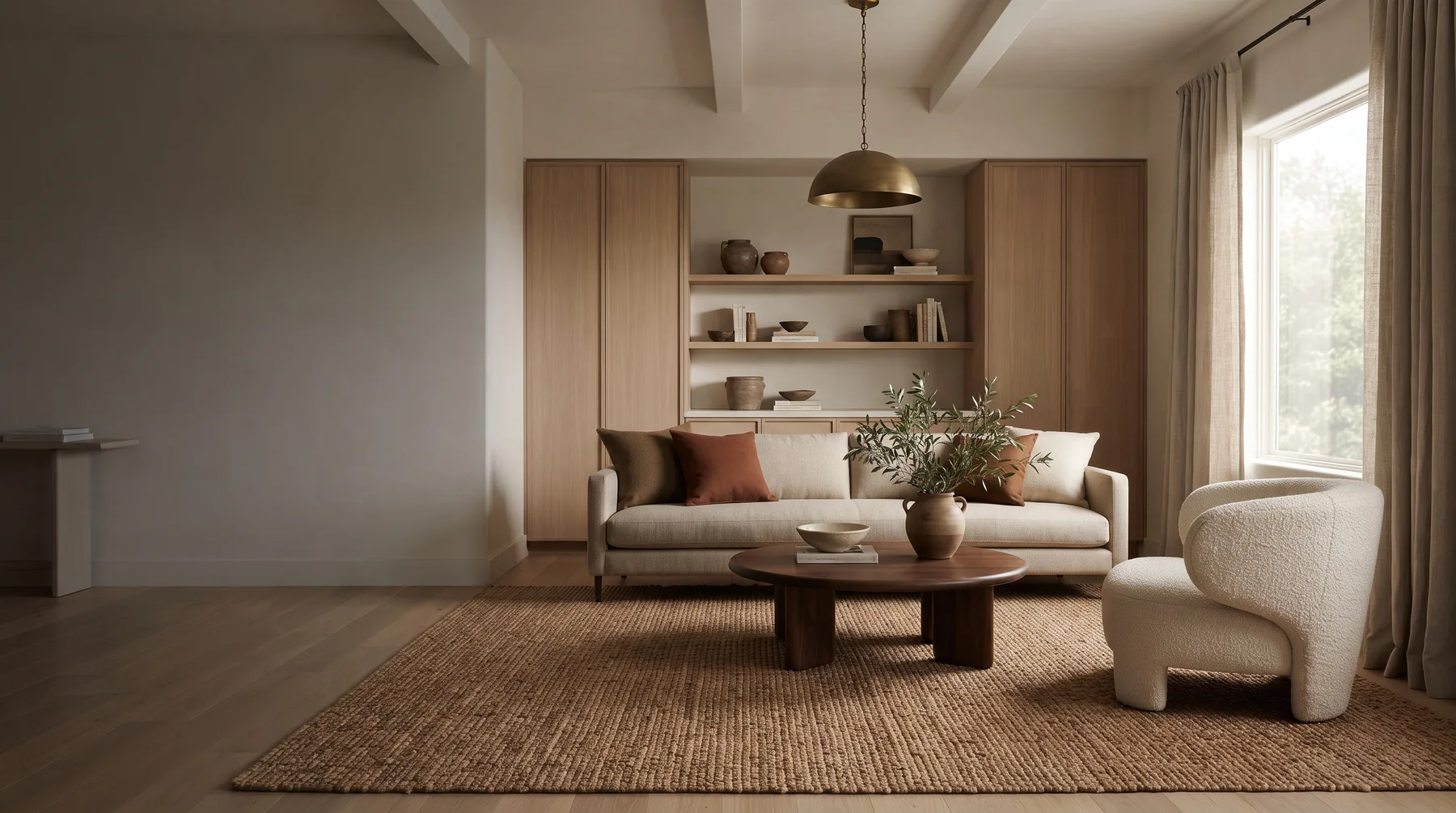
Natural jute adds coarse texture and visible variation, but it can shed, hold dust beneath the weave, and stain when spills sit. Wool comes in many constructions and pile heights. Synthetic rugs vary just as widely, so treat performance claims as product-specific facts that need confirmation.
Let moving furniture set the pile height
A low-profile rug is the practical starting point under dining chairs, near a door swing, or anywhere furniture moves often. Higher pile feels softer and adds more visual depth, but chair legs and doors need extra clearance. Check the listed pile height rather than relying on a close-up photograph.
Use a placement rule for each room
In a living room, connect the sofa and chairs with at least their front legs on the rug. For a dining room, begin with about 24 inches beyond each table edge and adjust for the actual chair depth. In a bedroom, centre the rug under the bed or place runners where your feet land; avoid a narrow border that disappears under the frame.
Large rooms may need more breathing room between the rug and walls. Small rooms can work with a tighter perimeter. Keep the reveal consistent where the architecture allows it.
Use colour and pattern to control visual weight
A pale solid rug keeps the floor quiet and puts more emphasis on the furniture. A darker or patterned rug can anchor light upholstery and disguise small shifts in colour better than a flat expanse of cream. Bring samples into the room because daylight, lamplight, flooring, and wall undertones all change what you see.
Layer rugs when one piece cannot do both jobs
A large natural-fibre base can establish the full furniture footprint, while a smaller patterned rug adds colour and softness where it will be noticed. Check the combined thickness, secure both layers with suitable pads, and make sure the top rug does not create a raised edge in a busy path.
Check these details before you decide
Confirm the finished dimensions, fibre content, pile height, backing, care instructions, expected shedding, and return terms on the current listing. View swatches against the floor and upholstery in morning light, then look again after the lamps come on.
Take this list with you
Measure the furniture, floor, and route in
- Record the room dimensions and the furniture that will touch or sit on the rug.
- Mark the proposed edges with painter’s tape and walk the usual paths through the room.
- Check the fibre, pile, backing, care instructions, and return terms on the current listing.
- Compare swatches in the room during the day and after the lamps come on.